For the Love of the Buddha Way
"If you want the attainments of the Buddhas and Ancestors, you should love the Way of the Buddhas and Ancestors." ~Dogen

In a recent post we shared about Tara Brach, a well-known psychologist and meditation teacher, announcing her AI companion, AvaTara (we're not making that up), that would give individualized instruction in her psychologized meditation methods. This instruction would come in lieu of a living meditation teacher.
Brach’s recent project came after years of collaborating with Jack Kornfield and training many people as living meditation teachers. Brach and Kornfield also made a lot of money doing so—estimated in the tens-of-millions of dollars. And there seems to be a lot more money that will be made with Brach's AI meditation-teacher companion. Some have named this kind of thing "the mindfulness industrial complex." But given our fondness for alliteration, we prefer to call it "the milking mindfulness for millions milieu."
You might ask, why shouldn’t Tara Brach make some serious money and live a comfortable life? These days, a lot of people make a lot of money on far less noble offerings, right? Isn’t this something that people interested in meditation should feel good about—that one of our elders, one of the leaders in the field, is being recognized in a culturally congruent manner?
This is the spirit amplified in the film, Killing Me Softly, where Jackie Logan, played by Brad Pitt, says:
In a related Substack post about Tara Brach’s upcoming AI companion, a Zen teacher commented:
“How about we train more people deeply so that they can go teach these students that Tara is sending to her digital twin? Shift the emphasis from cults of personality to actual succession planning and organizational sustainability.”
Deep teacher training and moving beyond the personalities of charismatic founders to become mature organizations sounds pretty good—on the surface.
In this post, we’ll take a deeper look, first, at why we do deep training. Second, we'll share information about our upcoming series of talks on the Bodhisattva Vows. And third, we'll address some objections that might be raised about the implications of our radical view of Vows.
First, why do deep training?
In Zuimonki, Dogen said:
What are the attainments of Buddhas and Ancestors? It begins with completely giving ourselves to the Great Vows to carry all beings from the shore of suffering, across the flood, to the shore of liberation. "The many beings are numberless, vowing to carry them across."
Torei wrote:
And Dahui said:
Because realizing the Way of Buddhas and Ancestors is not something that can be done easily or quickly, if you don’t love the Way, you will struggle mightily. If you love the Way, you can be light and easy in the body-mind as you give yourself completely to the Buddha Way.
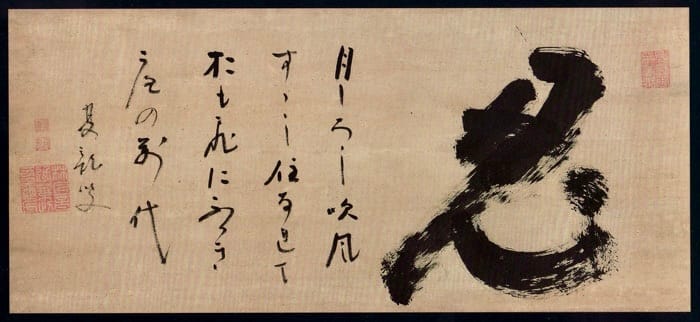
Torei also said:
For more about Vows, see this:
 Dosho Port
A Bodhisattva vows to liberate beings, and in order to liberate beings, one must have some share of liberation oneself (aka, kensho). In other words, we ourselves must taste the fruit Buddhahood. Now, that doesn’t mean it is necessary to have fully realized Buddhahood in order to teach Zen, but one must have had some taste of realization, and worked diligently for years to integrate that taste, so that one can actually function in support of others’ liberation.
But in any case, the Bodhisattva Vows must be primary, not the ambition to teach, to wear robes, to be immersed in the "bells and smells" of temple life, or to amass a following by making others priests and teachers. Yet, we're seeing more and more dharma organizations following the lead of the yoga and mindfulness worlds by offering teacher training to students who are quite new to practice and have not actualized even a small share of realization.
And, as an aside, note that someone who has completed a short course in teaching meditation like Brach and Kornfield's "Mindfulness Teacher Certification Program" (18-months for $8,700 and you will "receive a distinguished certification that instills trust in those you serve"), is unlikely to have practiced with sufficient diligence to experience adverse effects themselves, received within-lineage methods for working with adverse effects, or studied the numerous classical texts with symptoms and antidotes.
Such a lack of training leads to the Pollyannish belief that there are no adverse effects, or (shock and horror) you might make front-page news by "discovering" adverse effects and cautioning people to sit no more than 30-minutes a day so as to avoid even mild effects like increased anxiety and sleep issues. However, serious practitioners in every generation have known about and worked through serious adverse effects without giving up on the aspiration to become Buddha.
 Dosho Port
Nevertheless, the driving force behind many teacher-training programs seems to be that teacher training is what brings in the money. It's odd that many more people are interested in shallow training in order to receive a mindfulness teaching certificate than those who are interested in the incomparable joys and transformative insights that come through training deeply. Nonetheless, that seems to be the case today.
So, rather than training for the love for training, for the timeless aspiration to become a Buddha and carry beings across, many dharma organizations are now training people in basic mindfulness skills to help them teach others to magically balance their unbalanced lives with a daily does of five to ten minutes of psychologized-mindfulness meditation. With a spoon full of sugar even.
When you live in a country that is "just a business," it is easy for dharma organizations to go with the flow of the capitalism current and also become more focused on the business side of things. And although members of dharma organizations are likely to have a different emotional tone than Jackie Logan—i.e., rather than an aggressive swagger, a spacey and pasty-faced half-smile—the underlying message is the same: "Now fucking pay me."
One alternative to compromising one's integrity in the above culturally congruent manner is to renounce worldly affairs:
 Dosho Port
Dogen cautioned:
That’s the meaning of training deeply.
And yet, even when one has some taste of the Buddha Way, worked to integrate that taste, and then begun to teach, the purpose of ongoing practice for oneself and others should not change. In order to stay within the Buddha Way, teachers and students must continue to make Buddhahood for themselves and others the primary priority.
Mindfulness teacher training, organizational concerns and ambitions, and the aspirations of a teacher to leave a legacy by propagating their own lineage—these are all worldly concerns. And, more likely than not, they are distractions from the aspiration to become a fully awakened Buddha and support others who are so inclined.

Talk Series: Vowing Like Your Life Depends On It
If you are interested in checking out Vine training, if you are struggling to establish a practice, or if you find yourself in some other place (like loving the buddhadharma), we invite you to join us for our early fall talk series on the Bodhisattva Vows.
We will use Torei Zenji's chapter "Faith and Practice" from his great classic, The Inexhaustible Lamp of the Zen School as the text (available here for paid subscribers at no cost). Our weekly posts during this period will focus on the Bodhisattva Vows, supplementing the Sunday talks.
Paid subscribers will receive invitations to the talks and can also participate in the study by asking a question or sharing a comment on these posts. Paid subscriptions start at $9 a month ($8,691 less than the Mindfulness Teaching Certificate Program—but note, you will not get a "distinguished certification").
Interested? If you are a paid subscriber, other than showing up, there is nothing more you need to do. If you are not a paid subscriber, become one to join us for the study of vow.
September 27 — Shuso talk: "Great Compassion: The Foundation of Vows"
October 4 — Student talk: "Implementing Vows"
October 11 — Meido Moore Roshi, guest teacher talk: "The Continuous Practice of Vows"
Several likely objections
There are many temptations not to make liberation one's primary priority, and many tempting indirect strategies that might seem skillful. After all, we do need to take care of ourselves and our organizations, right?
First, some might say, “We need to do movie nights, ordain priests, train teachers, plan successions, and develop organizational sustainability in order to get to a place where we can do diligent practice.”
We know of one large dharma organization that once had 60 residents and over 60 active committees. Every resident, then, served on several committees so that there was little time for anything but cleaning the toilets and committee meetings. And another medium-size group now has a dozen social justice task forces alone.
Phew! Anybody remember where the zafus went?
If a teacher and/or organization offers movie nights, etc., hoping that such activities will attract people who want to do diligent practice, don’t be surprised when movie nights just attract people who like movie nights.
Although many things might sustain the self and serve an organization, the best way to offer diligent practice is by practicing diligently and inviting other like-minded folks to join you. Granted, there might not be many who are so inclined.
Surveying the past, we find that many great teachers had few students and even fewer successors. For example, great master Zhaozhou, whose MU koan still breaks us open today, had only a dozen or so students and both of his successors died before he did. Nevertheless, his style was to just do diligent practice. And even when the zendo roof had so many holes in it that the students could see stars through the roof, Zhaozhou urged them on in wholehearted zazen. And, in the winter and when the snow fell on them as they sat, Zhaozhou said not to worry about it and instead urged them to practice even more wholeheartedly.
Second, others might object to our focus on liberation and diligent practice, saying, "We have to take care of our organization and ourselves. We can do movie nights, etc., and do diligent practice."
Let us just say, "Good luck with that." Doing even one thing well is difficult in this fleeting world. Or as Dogen more elegantly put it:
Then, finally, there are others who might say, "Serving a sangha and taking care of the organization are themselves the practice of the Buddha Way."
They then might quote Dogen, saying:
Let's take a deeper look at this objection. What these folks often ignore is the context in which Dogen said this—a persistent issue with those who quote Dogen as supporting the "my life-as-it-is, is it" dogma (so there's no need to practice diligently).
More about that dogma here:
 Dosho Port
The above sentence by Dogen comes from Talk on Pursuing the Way. Yes, "pursuing the Way." First, there is this question:
"Homeleavers quickly escape the various involvements and have no obstacles to pursuing the Way in zazen; but how can the busy householder practice single-mindedly and conform to the unconditioned Way of the Buddhas?"
Although the questioner is idealistic about homeleavers, it is important to note that in Dogen's time, "homeleaver" did not refer to those who just did a ceremony and donned some new robes without a change in lifestyle. Instead, a homeleaver in Dogen's day left home and focused full-time on the diligent practice of the Way—pursuing the Way in zazen for many hours each day.
Dogen begins his response to the questioner as follows:
So, due to their vows and as an expression of their vows, the Buddhas and Ancestors compassionately open the gate of liberation. "Gate" refers to the methods to cultivating precepts, samadhi, and wisdom. We all must walk through the gate by doing the method. Further, what is translated here as "verification" is 證 (Japanese, shō). The Digital Dictionary of Buddhism defines 證, among other things, as "to be fully enlightened."
Dogen continues:
That is, due to the great compassion of the Buddhas and Ancestors, there are many householders as well as homeleavers who have awakened. Dogen then gives examples of two emperors and two high-level ministers who, despite their many duties, "[...] pursued the Way in zazen and entered verification of the great Way of the Buddhas and Ancestors."
The emperors and high-level ministers may have to do their duties, just as parents have to attend to their children, and most of us have to do some work in the world to sustain our lives and others for whom we are responsible. Yet, nobody has to do movie nights. Nobody has to get a mindfulness teacher certificate for $8,700. And, whoa, one could do a lot of diligent practice for $8,700—but you won't get a certificate.
Then Dogen says:
And it is in that context that Dogen offers the often quoted lines concluding with "... there are no worldly affairs within the buddhadharma." That is, for those who devote themselves wholeheartedly to the Way of Buddhas and Ancestors, who diligently pursue the Way in zazen, and who then awaken to the Way, there are no worldly affairs within the awakened Way.
Dogen does not say that we should put off diligent practice of the Way. Succession planning and organizational sustainability—let alone fooling people with an AI meditation teacher who offers them only lifeless pablum—don't amount to much and so don't matter much. What matters much is living the Great Vows, diligently pursuing the Buddha Way in zazen, life after life, from now until full and complete Buddhahood.