Vowing To Become A Buddha: Possible or Impossible?
"Although attaining the Buddha Way is possible, to attain the Way through our own power alone is impossible."
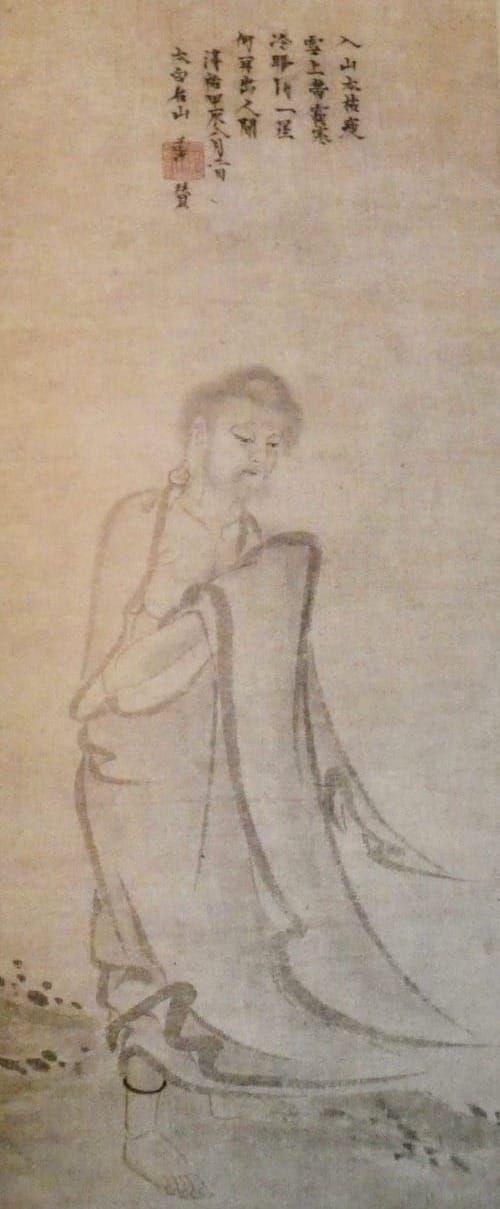
The verse in the upper portions of the above painting, "Shakyamuni Descending the Mountain," is by Chijue Daochong (1169-1250) and in translation, it reads:
"Into the mountains he went, only to be utterly emaciated.
Chilly frost atop the snow; when his lifeless eyes managed to see the star.
Why, after all, did he return to the human realm?"
Why indeed?
In this post, we'll first explore the vows that a Bodhisattva practitioner takes in order to become a Buddha, The Four Great Vows. We explore this question: are we just dreaming the impossible dream or is it actually possible to become a Buddha?
It is often said in contemporary Zen discourse that these Vows cannot be fulfilled. We disagree for three reasons. First, that the Vows cannot be fulfilled is just the first phrase in each of the Vows. Second, arguing that they cannot be fulfilled ignores some significant historical eyewitness accounts, like Shakyamuni Buddha's. And, third, it ignores the personal experience of many contemporary practitioners.
Along the way, we'll look at the issue of Shakyamuni coming down from the mountain. And conclude with a vital yet seldom discussed practice for attaining the Buddha Way—kanno doko.
Here is a literal rendering of the Four Great Vows:
Beings are numberless; I vow to liberate them.
Afflictions are inexhaustible; I vow to end them.
Dharma gates are boundless; I vow to enter them.
Buddha’s Way is unsurpassable; I vow to accomplish it.