The Mistaken Transmission of the Pure Precepts to the West
"So you're saying that the jukai precepts I received were wrong, my priest ordination was wrong, and so the folks who received jukai, priest ordination, and transmission through me have received the wrong precepts. Is that your bottom line with all this, Dosho, or am I missing your point?"

At many Zen Centers in the West, what are called The Three Collective Pure Precepts are in fact not the received Three Collective Pure Precepts but an amalgam of things that are not The Three Collective Pure Precepts. This matters for several reasons:
1) The received Three Collective Pure Precepts are an essential synergistic training container within which awakening might be clearly realized and expressed;
2) The heart of the ceremony to offer and receive the precepts is to enter into relationship with the lineage of Buddhas and Ancestors and receive their mysterious support (kanno doko, the interacting communion of appeal and response)—if we don't tune ourselves to them, they don't tune themselves to us;
3) When offering aspiring practitioners something as important as the precepts, it is essential to offer them the true precepts of the Buddhas and Ancestors and not a recently created mishmash, while telling students that they are the "traditional" precepts.
In Bendowa, Dogen refers to the "unmistakenly handed down tradition." In many cases in the West, however, at least in regard to The Three Collective Pure Precepts, what we have now is a mistakenly handed down tradition.
In what follows, I'll present The Three Collective Pure Precepts, explore three sources for the present confusion, briefly unpack The Three Collective Pure Precepts based on the teaching of Asanga, look at the implications for offering and receiving something other than The Three Collective Pure Precepts, and finally, suggest some action steps. In addition, you'll find resources for further study at the end of this essay.
Before I get into all that, though, I want to say that I'm indebted to Katagiri Roshi and Tenshin Anderson Roshi from whom I first learned about the traditional Three Collective Pure Precepts.

What are The Three Collective Pure Precepts?
Just to be clear, this is not a matter of opinion. Although there are some minor variations in what are presented in primary sources, it is fair to say that in India, China, and Japan the fact of the matter is that The Three Collective Pure Precepts are these:
- The precept of embracing and sustaining guidelines.
- Sanskrit: pratimoksha-samvara-shila;
- Chinese: 攝律儀戒;
- Japanese pronunciation: shō ritsu gi kai;
- a character-by-character English translation: embracing/sustaining/gathering vinaya/discipline deportment precept
- The precept of embracing and sustaining wholesome actions.
- Sanskrit: kushala-dharma-samgraha-shila;
- Chinese: 攝善法戒;
- Japanese pronunciation: shō zen bō kai;
- a character-by-character English translation:
embracing/sustaining/gathering wholesome/good dharmas precept
- The precept of embracing and sustaining all beings.
- Sanskrit: sattvartha-kriya-shila;
- Chinese: 攝衆生戒;
- Japanese pronunciation: shō shu jō kai;
- a character-by-character English translation: embracing/sustaining/gathering living beings precept
Each of the three is expressed in just four characters—and two of the four characters are the same in each of the three precepts (攝 embracing and sustaining and 戒 precept).
One source for The Three Collective Pure Precepts is Great Master Asanga's (4th century) Stages of a Bodhisattva (Bodhisattvabhumi), "Chapter 10: Ethics," and in several of his other works. It is likely that Asanga's work was an explication of a system that he inherited, possibly from Maitreya Bodhisattva in Tushita Heaven, rather than something he created.
The Three Collective Pure Precepts can also be found in The Bodhisattva Garland Sutra. In addition, many great masters throughout the last 1,700 years, including Vasubandhu (4th century), Daoxuan (596–667), Bodhidharma (died ~530), Saicho (767–822), Dogen (1200-1253), Gyonen (1240–1321), Manzan (1635–1714), and Menzan (1683–1769) have all cited the above as The Three Collective Pure Precepts.
Further, The Three Collective Pure Precepts as cited above are included in the Gyojikihan, translated by T. Griffith Foulk as Standard Observances of the Soto Zen School, and are used in contemporary Japanese Zen in both Soto and Rinzai temples and monasteries.
On mixing up the precepts
Given that there is so much uniformity in what are called The Three Collective Pure Precepts in the received tradition, it is surprising to find an enormous amount of diversity in what are referred to as The Three Collective Pure Precepts at Western Zen Centers.
In fact, in surveying the websites of about two dozen Zen Centers, I've found only two whose precept translations are based closely on the above Three Collective Pure Precepts (i.e., Korinji and the Diamond Sangha). In this regard, at least, many Zen Centers seem to be participating in the Western dharma echo chamber, quoting each other's errors as authoritative sources.
Many Zen Centers use a version of The Precepts of the Seven Buddhas and call these The Three Collective Pure Precepts. Others blend The Precepts of the Seven Buddhas with The Three Tenets of the Zen Peacemaker Order. Others seem to blend The Precepts of the Seven Buddhas with Daoxuan's commentary on The Three Collective Pure Precepts found in Explanation for Venerating Refuge in Deportment.
One representative example of something that is called The Three Collective Pure Precepts that is not The Three Collective Pure Precepts is this: "To avoid evil, to do good, and to liberate living beings." More examples below.
Some will say that it really doesn't matter what we use as The Three Collective Pure Precepts, because we Zennists rely on the spirit of the precepts, not the letter. However, in terms of "pure" precepts, the correct spirit is to follow the letter of the received tradition and not make stuff up. Without careful attention to the details of the received process, especially the words and meaning of the precepts, we don't step into the bodies of the Buddhas and Ancestors, enter their merit stream, and receive their mysterious support (kanno doko).
Dogen, for example, strongly advocated for following the details of the guidelines and precepts. In his comments on the Wild Fox koan about the fox/man's request to be buried as a monk, he didn't even like not following the rules in a story. He wrote:
To paraphrase: do not make light of the dharma standards of Buddha Ancestors. Value their excellence. Do not go along with inappropriate requests. It is rare to encounter even a single precept of the Buddhas and Ancestors. Do not compromise with cultural considerations or people's feelings.
In this spirit, when the great 20th century master, Hongyi, discovered that there had been gaps in the transmission of the vinaya which he had received, he wondered if he, or any monastics in China had received an authentic vinaya transmission. It caused him to question his status as a monk and seems to be the reason he did not give the precepts to either monastics or householders during his teaching career. For more on this, see:
 Dosho Port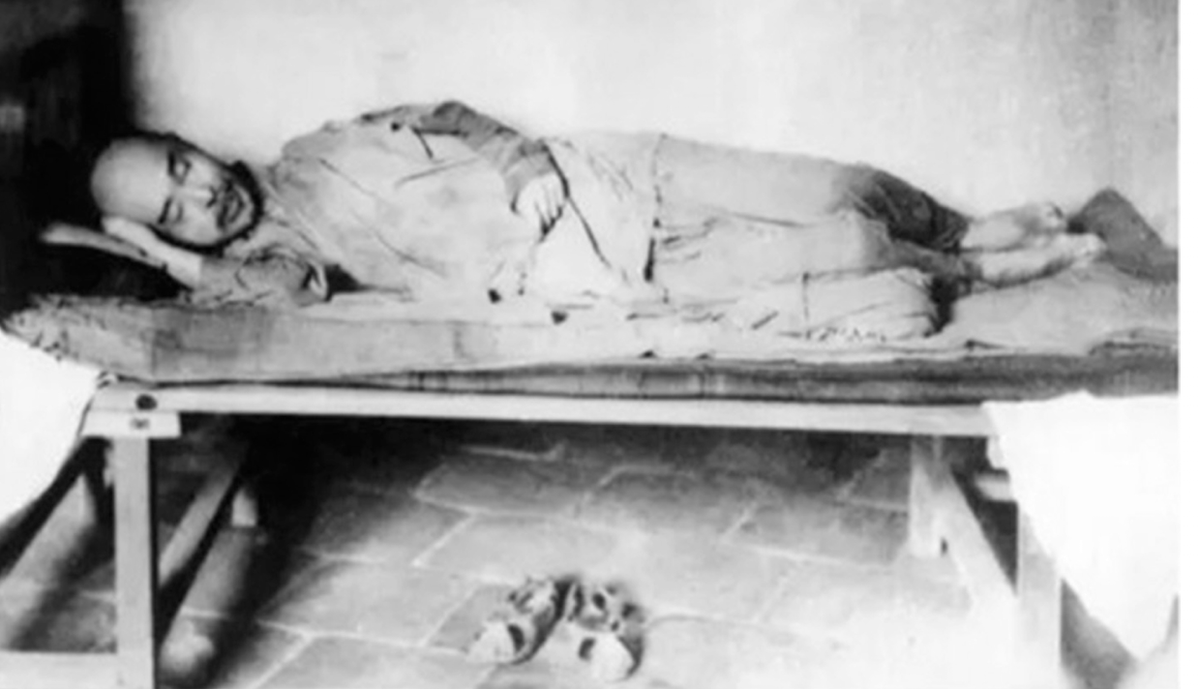
In addition, Xuyun (1839–1959, or “Empty Cloud"), another great 20th century dharma master said (translation by Raoul Birnbaum):
Some contemporary Zen teachers might plead ignorance—they thought that they were transmitting the precepts exactly as transmitted by Shakyamuni Buddha, as I recently heard one Zen teacher say to his community. Unfortunately, they weren't.
None of the information presented here is new. So if teachers aren't aware of it, they haven't done what they need to do to learn about the tradition. Further, there are important learnings about unintended outcomes that flow from casually making changes to the received forms and teachings due to provisional understandings and short-term convenience without thorough due diligence.
The three main sources for the confusion
How did the transmission of The Three Collective Pure Precepts get so mixed up? The three main sources are The Precepts of the Seven Buddhas, an often-quoted commentary by Daoxuan, and The Three Tenets of the Zen Peacemaker Order (founded by Bernie Glassman Roshi). Below, I'll briefly explain each.
The Precepts of the Seven Buddhas
In the Dhammapada and elsewhere in the Pali Canon, we find The Precepts of the Seven Buddhas:
This, of course, is a very important summary of all the Buddhas' teachings. However, it differs from The Three Collective Pure Precepts in several important respects. See below for more on this point.
I've seen several contemporary sources hypothesize that The Precepts of the Seven Buddhas evolved into The Three Collective Pure Precepts in the Mahayana. However, I've seen no support for this in the literature. Instead, until recently, these two sets of precepts seem to have existed side-by-side.
Dogen, for example, has a fascicle in Shobogenzo, "Not Doing Evil," that unpacks The Precepts of the Seven Buddhas. He also teaches The Three Collective Pure Precepts, for example, in the Shobogenzo fascicles, "Receiving the Precepts," and "Essay On Teaching And Conferring The Precepts," without mixing them up with The Precepts of the Seven Buddhas.
Daoxuan's commentary from Explanation for Venerating Refuge in Deportment
Several of the pioneering Zen teachers in the West translated The Three Collective Pure Precepts either based on The Precepts of the Seven Buddhas or due to the influential commentary on The Three Collective Pure Precepts in Daoxuan's Explanation for Venerating Refuge in Deportment. Daoxuan is regarded as the preeminent authority on the vinaya and is often quoted in both the Chinese and Japanese traditions, including in a seminal vinaya text by Gyonen (see the Resources section below), as well as by the important 18th century Soto master, Menzan.
Here is a summary of Daoxuan's commentary:
Regarding "The precept of embracing and sustaining guidelines," we take up the rules of discipline in order to cut off all evil. This cutting off manifests the Dharma Body (Dharmakaya) of the Buddha. Regarding "The precept of embracing and sustaining wholesome actions," we gather together all good dharmas in order to manifest the Body of Recompense (Sambogakaya). Regarding "The precept of embracing and sustaining all beings," we vow to support the liberation of all beings by manifesting the Transformation Body (Nirmanakaya).
For the first pure precept, most of the Zen pioneers may have used Daoxuan's words "don't do evil" instead of referencing the actual precept to "embrace and sustain guidelines." I suspect this was a way to avoid the conflict that the actual precept would cause their students in the 1960s–who were mostly rule-breaking hippies.
Indeed, in the early 1990s, I participated in a precept workshop led by Tenshin Anderson Roshi (1943- ), mostly attended by such former hippies. When he presented the traditional formulation of the first pure precept, more than a handful of those gathered expressed their objections with strong emotions and refused to accept that what Tenshin Roshi had offered was correct.
As for the third pure precept, "The precept of embracing and sustaining all beings," it seems that the Daoxuan commentary is also the original source for expressing it as to "liberate beings." This explains why the most common errant version of the third pure precept doesn't line up with the third of The Precepts of the Seven Buddhas, to "purify one's mind."
This is not the first time that I've written about commentaries being mixed up with primary sources. See this on The Ten Line Kannon Sutra:
 Dosho Port
Three Tenets of the Zen Peacemaker Order
In the 1990s, inspired by Thich Nhat Hanh (1926-2022) and his Order of Interbeing, and Bernie Glassman Roshi (1939–2018) and his Zen Peacemaker Order, rewriting the Zen precepts became a popular thing for Western Zen teachers to do. Some Zen teachers who rewrote the precepts do not appear to have worked from an original language (e.g., Chinese), nor does it appear that they were sufficiently informed about the nature of the Zen precepts and how the precepts function in diligent practice.
Now, students and new teachers in these lineages seem to be unaware that what they received was the result of someone in their lineage being "creative" and/or missing the point. I've heard in-person and seen online numerous examples of these creative efforts being mistakenly called the "traditional precepts" that go back 2,600 years to Shakyamuni. They don't.
Note that to their credit, the Zen Peacemaker Order's website does not call these The Three Collective Pure Precepts, but The Three Tenets. They are:
Not-Knowing, by giving up fixed ideas about ourselves and the universe; Bearing Witness to the joy and suffering of the world; Taking Action that arises from Not-Knowing and Bearing Witness.
In my survey of Zen center websites, I was surprised to find that more than a handful were using something that seemed to be a mix of these Three Tenets and what resembles The Precepts of the Seven Buddha. They then call the whole mishmash The Three Collective Pure Precepts. For example, the following with forty-two words, few of which align with the twelve characters of the The Three Collective Pure Precepts:
Do not commit harm (to practice not-knowing thereby giving up fixed ideas about myself and the universe). Do good (to bear witness to the joy and suffering of the world). Do good for others (to effect the healing of myself and others).
Clearly, The Three Tenets are not the same as The Three Collective Pure Precepts. One could argue whether The Three Tenets are fitting commentaries or not, but that's beside the point. The simple truth is that combining two sets of non-Pure Precepts (e.g., The Three Tenets and The Precepts of the Seven Buddhas) does not create The Three Collective Pure Precepts, but a hybrid which is not The Three Collective Pure Precepts.
All of The Sixteen Bodhisattva Precepts, including The Three Collective Pure Precepts, are proto-precepts (i.e., original, earliest form, or primitive precepts). They are brilliant in their direct simplicity—a key to their carrying power, generation after generation. When you blend commentary with these proto-precepts, you tell practitioners what to think, as well as limit the precepts to a certain time, place, and perspective. In addition, most contemporary efforts to rewrite the precepts highlight the conventional view—rather than opening the door for investigation, discovery, and for the non-dual profundity of the buddhadharma.
I will make one additional point: "to effect the healing of others" as the above precept states, has little to do with the traditional version of the third pure precept. Zen practice is not medical school or training for psychotherapists. The Buddhadharma is about liberation. Granted, "healing" here might refer to healing the split between the separation of self and other. However, that meaning is not at all explicit in the above.

The practical significance of The Three Collective Pure Precepts
The Three Collective Pure Precepts were Asanga's central organizing principle for his "Chapter on Ethics" and indeed for the entire Bodhisattva Way of awakening. In the form in which they are offered to us, they have the capacity to be a powerful, portable training container. Asanga summarized The Three Collective Pure Precepts as follows:
The ethics of vow refers to the first pure precept: "The precept of embracing and sustaining guidelines." First, the mind is stabilized by embodying the precepts one has taken (not to kill, not to steal, not to engage in sexual misconduct, etc.), either as a householder or as a homeleaver, and the training guidelines. These are the rules for training specific to a particular training container. E.g., to show up on time, bow before your seat, turn and bow the other direction, close doors quietly, cover your mouth when you cough or sneeze, etc.
These small details are enormously important. And The Three Collective Pure Precepts uplift these details and the practitioners who follow through with their vow to embrace and sustain them. Note that this is not a general, undefined vow like "to avoid evil," but an actionable practice that involves following the precepts and specific guidelines within your training container.
The ethics of collecting wholesome factors is the second pure precept: "The precept of embracing and sustaining wholesome actions." Collecting wholesome factors (paraphrasing Asanga) includes doing things like hearing the teaching and contemplating it, cultivating stopping and seeing, delighting in solitude, respectfully addressing one's teachers, serving the sick, giving a "Well done!" to what has been well spoken, generating satisfaction from the bottom of our hearts for all the merits of living beings in infinity, and dedicating everything wholesome done with body, speech, and mind, and all that is yet to be done, to supreme, right and full awakening.
These wholesome factors are not gathered as an ego-syntonic strategy of appearing to others to be a "good person" or a "good Buddhist," but through the vow we gather energy for the Way, so that we ourselves can attain Buddhahood (and then profoundly benefit living beings). So, to reiterate, the second pure precept is not about being a "do-gooder," but about gathering energy for the Way for ourselves. Yes, that is okay; and more than okay—it is a necessity.
The ethics of accomplishing the welfare of living beings is the third pure precept: "The precept of embracing and sustaining all beings." The phrase "the maturation of living beings" means to support others on their paths to Buddhahood. This is the opposite of supporting their delusions by helping to keep them chained to the desire realm. With this pure precept, we vow to do what we can, even before we realize Buddhahood, to help others in every way possible so that they can also realize Buddhahood.
Implications
Recently, while emailing about this issue with Zen teacher colleagues, one teacher wrote (edited for brevity, clarity, and to protect the innocent):
"So you're saying that the jukai precepts I received were wrong, and my priest ordination precepts were wrong, and so the students who received jukai, priest ordination, and transmission from me have received the wrong precepts. Is that your bottom line with all this, Dosho, or am I missing your point?"
I am sorry to report that, no, my colleague was not missing my point.
If you have received a version of The Three Collective Pure Precepts that varies considerably from those which have been unmistakenly handed-on (beyond variations in translations), then it could be argued that you have not received the full Zen precepts and have not optimally entered into the Buddha Way.
You might consider taking some action. In the following, you will find some steps you might consider.
Action steps
If you are a Zen teacher or student who has received the precepts in some form other than the The Collective Pure Precepts, you could retake The Three Collective Pure Precepts in their received form from a preceptor who received them in their traditional form. As a teacher, it seems to me, that you would then be qualified to change what you offer students to the correct form.
Another option (that I'm reluctant to mention) is that of self-transmission of The Three Collective Pure Precepts, as allowed in two key vinaya texts for times when the normal process for receiving the precepts from a fellow human is not possible. The practitioner who has already taken Bodhisattva vows can do repentance practice before images of the Buddha and Bodhisattvas (an essential ingredient in receiving any precepts), and then wholeheartedly embrace and sustain the Bodhisattva precepts.
Raoul Birnbaum (see Resources below, and especially 69-77 for important information about this process) notes that the vinaya texts mentioned above differ as to whether or not ...
"[...] the supplicant [must] receive a sign of assent—such as a dream or vision—from that world of the Buddhas and Bodhisattvas before proceeding to the transmission rite. The process operates on a timetable of its own internal logic, dependent in part on the sincerity of the individual’s confession and repentance practices. It could take an hour to receive the sign, or it could take a year. Or longer."
Self-transmission (i.e, receiving the precepts, not dharma transmission) and interpreting "signs of assent" are, of course, processes fraught with the possibility of self-deception. In addition, from the Chinese Buddhist perspective, the whole Japanese approach to the precepts has been fraught with issues since the time of Saicho (9th century). Nevertheless, in order to do my due diligence, I'm mentioning the possibility of self-transmission.
If you are a teacher who didn't receive the traditional version of The Three Collective Pure Precepts, but you don't want to receive the traditional Three Pure Precepts from a colleague or self-transmit, you could instead change your narrative around the precepts.
Begin by acknowledging that instead of The Three Collective Pure Precepts, precepts that have been standard in the Mahayana for at least 1,700 years, you are offering something new. Then rename what you're giving to students (e.g., The Three Tenets Combined with The Precepts of the Seven Buddhas). Or if you are giving The Precepts of the Seven Buddhas, simply call them by their true name—communicating with students that, again, this is something new.

Resources
The Bodhisattva Path to Unsurpassed Enlightenment: A Complete Translation of the Bodhisattvabhūmi, Ārya Asaṅga, translated by Artemus B. Engle
The Great Treatise on the Stages of Yogic Practice Volume 2: A Complete Modern Translation of the Yogacarabhumi-sastra, by Asanga, translated by Yasunari Kato
The Essentials of the Vinaya Tradition: The Collected Teachings of the Tendai Lotus School, Gyonen, translated by Leo M. Pruden
Raoul Birnbaum's "Vinaya Master Hongyi’s 弘一 Vinaya Problem" in Ester Bianchi and Daniela Campo's Take the Vinaya As Your Master: Monastic Discipline and Practices in Modern Chinese Buddhism
Going Forth: Visions of the Buddhist Vinaya, edited by William M. Bodiford
Being Upright: Zen Meditation and Bodhisattva Precepts, by Tenshin Reb Anderson Roshi. This is the only contemporary Zen book that I know of that has the correct Three Collective Pure Precepts. Tenshin Roshi takes a conciliatory position regarding the issue of the received Three Collective Pure Precepts.
The Evolution of the Zen Precepts, edited by Charlie Korin Pokorny
Secrets of the Zen Precepts, by Manzan Dohaku, translated by Lucy Xiao and Kokyo Henkel
History of the Three Collective Pure Precepts, edited by Kokyo Henkel