Polishing a Tile to Make Four Subtle Wisdom Buddhas
A translation of the Four Subtle Wisdoms with explanatory comments.

With our Vine of Obstacles Zen students, we recently worked through this part of the koan, "Nanyue Polishes a Tile":
After awakening, Mazu was always doing zazen. One day his teacher, Nanyue, approached and asked “What are you figuring to do by sitting zen?”
Mazu said, “Figuring to make a Buddha.”
Nanyue reached down, picked up a rock and a tile, and started to scrape the rock on the tile.
Mazu asked, “What are you making?”
Nanyue said, "I'm polishing this to make a mirror."
And here's a portion of Dogen's commentary:
Consider that the following two lines in the koan are being juxtaposed:
“Figuring to make a Buddha” and "I'm polishing this to make a mirror."
What we're left with, then, is that making a Buddha — the whole point of practicing the buddhadharma in any Mahayana tradition — is undertaken by polishing this body-mind to make something perfectly reflective and luminous. Thus, Dogen mentions the bright mirror and the old mirror as models, i.e., models for making Buddhas.
Now, someone might protest, saying, "We're already Buddhas!"
And one of us — or both of us in unison — might say, "Prove it! You're in your head and getting way ahead of yourself."
What it means to "make a Buddha" is not a matter of opinion (including ours, of course). Our great dharma ancestors worked this out carefully and in community, rubbing the tile of their body-minds with the rock of direct experience.
One way to express the process of actually becoming Buddha — not doing armchair theorizing in a manner that does not benefit self or others — is by Great Master Asanga (4th c.), who strongly influenced all of the streams of the Mahayana in India, Tibet, China, Korea, Japan, etc. Dogen probably had Asanga's teaching in mind when he raised the issue of the bright mirror and the old mirror. Hakuin (1686-1769) certainly did when he talked about the Four Subtle Wisdoms, which he did often, including in his "Song in Praise of Zazen" where he says:
How brilliant the full moon of fourfold wisdom!

Why talk about systems of development?
To go on a journey and not know how the path is likely to unfold, or to ignore the reports from folks who've previously traversed the path themselves, would be unwise (and arrogant). The same holds true for the journey of dharma. You might, for example, think that you are well on your way only to find out that you've hardly begun. And although few people will go to end of the journey in this one life, these systems point to the great possibility of dharma practice, a possibility that can be held quietly in our hearts while we wholeheartedly devote ourselves to here and now. More on this here:
 Dosho Port
After that extended introduction
In this post, we're going to share our in-house translation of several paragraphs from Asanga's Compendium of the Mahayana (Mahayanasamgraha). One version of the Mahayanasamgraha includes commentaries by Asanga's younger brother, Vasubandhu (4th c., "Living among Relatives," the 21st-generation successor in India in the surviving Zen lineages), and Asvabhava (5th c.). We'll translate Asvabhava's work on the Four Subtle Wisdoms below because it is so clear.
For another rendering of this passage, see:
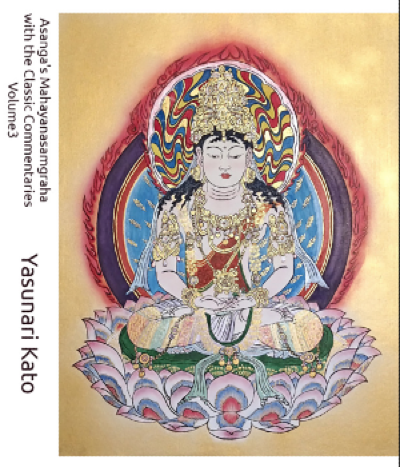
In what follows, the translation is inset in italics. The bolded words and phrases within the italicized sections are explained in the annotations.
Asvabhava begins
Because of the transformation of the alayavijnana, the eighth consciousness, one obtains the Great Perfect Mirror Wisdom, one of the Four Subtle Wisdoms, and the others in sequence as appropriate. Just know that by transforming the alayavijnana, one obtains the Great Perfect Mirror Wisdom, and although objects of cognition do not appear before one’s eyes, one is capable of not forgetting without the limitations of time and place. All objects of cognition are always without delusion. Practice devoid of conceptualizing gives rise to the Enjoyment Body reflecting Buddha’s wisdom.
First, note that the essential process of making a Buddha is to transform our consciousness from tiles to mirrors, beginning with the eighth consciousness, the alayavijnana, or storehouse consciousness. What is the alayavijnana?
alayavijnana: akin to the unconscious mind but with a Buddhist twist - all the unprocessed karmic seeds from the actions of this and past lives are stored there. The Digital Dictionary of Buddhism (DDB): "[The storehouse consciousness] is said to grow, develop, and increase [...] by the seeds of karma and the impressions of the afflictions which have accumulated since beginningless time through the various experiences of conscious awareness."
The Princeton Dictionary of Buddhism (PDB) completes the above thought with this: "The alayavijnana provides continuity from moment to moment within a given lifetime and from lifetime to lifetime, all providing the link between an action performed in the past and its effect experienced in the present, despite protracted periods of latency between seed and fruition."
objects of cognition do not appear before one’s eyes: Hakuin frequently mentions the transformation of the alayavijnana into the Great Perfect Mirror Wisdom. Here's one example:
-- From Complete Poison Blossoms from a Thicket of Thorn, Hakuin Zenji & Norman Waddell.
"... Do not appear before one's eyes" is another way of saying "the light of the Great Perfect Mirror Wisdom is as dark as pitch-black laquer."
not forgetting without the limitations of time and place: With the arising — and not forgetting — of the Great Perfect Mirror Wisdom, the conditions of time and place do not limit the state of the body-mind. Instead, the conditions all shine forth as dark, dark.
devoid of conceptualizing: DDB: “The function of a state of mind where there is freedom from making distinctions between objects, or between subject and objects, normally considered to be the superior mode of function of the enlightened mind in Mahayana Buddhism.”
Enjoyment Body: DDB: "Also called body of bliss, or body of recompense (Skt. saṃbhogakāya). One of the three bodies of the Buddha. The ideal body of a buddha that is produced upon entering Buddhahood as the result of vows undertaken during the practices in the bodhisattva path. The body of the Buddha with which the blissful reward of enlightenment is enjoyed."
Asvabhava continues with the second of the Four Subtle Wisdoms
When the defiled manas consciousness is transformed, one realizes the Wisdom of Essential Identity. With the first direct realization one obtains verification, then in the stage of cultivating the path, the transformation is repeatedly clarified and purified. From this peaceful abiding, one enters the nirvana of nonabiding, always accords with great kindness and great compassion, and can blissfully appear anywhere as a reflection of the Buddha.
defiled: according to DDB, Asanga, in his Treatise on the Scripture of Adorning the Great Vehicle identifies three connotations for "defiled": "(1) afflicted defilement, referring to all mental disturbances; (2) karmic defilement, referring to all unwholesome behaviors, and (3) defiled birth, referring to cyclic existence itself."
Sound familiar?
Importantly, it is this "defiled" consciousness that is transformed such that one can manifest great kindness, great compassion, and blissfully appear anywhere to support the liberation of living beings.
manas consciousness: often referred to simply as "ego consciousness." DDB: "In Yogâcāra theory, the manas is the seventh of the eighth consciousnesses. It is regarded as the locus for the creation of mistaken views of self and the afflictions which result from such mistaken views."
first direct realization one obtains verification: the first of the Four Subtle Wisdoms is too dark to be considered enlightenment.
transformation is repeatedly clarified and purified: Hakuin notes that it is at this point in the path of cultivating verification that one can begin to practice the Jewel Mirror Samadhi (Japanese, Hokyozanmei).
nirvana of nonabiding: This is one of four types of nirvana. DDB: "Both the afflictive hindrances and the cognitive hindrances are eliminated, and a deep wisdom is attained wherein saṃsara and nirvana are not distinguished. Not abiding in nirvana nor disliking saṃsara, one teaches sentient beings yet does not become attached to the world."
And the third of the Four Subtle Wisdoms
Transforming the mano-vijnana, the sixth consciousness, results in obtaining the Marvelous Observing Wisdom complete with all dharani gates and samadhi gates, as if discovering a hidden treasure. In the great assembly, one can manifest within the function of sovereignty, cutting through the web of doubts and raining dharma rain.
mano-vijnana: or sixth consciousness. DDB: "Interpreted variously as 'mental consciousness,' 'discriminating consciousness,' 'thinking consciousness,' 'liminal consciousness,' etc., but none of these renderings are able to express the full range of the characteristics and functions of this mode of consciousness, which also handles emotions, intuitions, memories, etc. [...]. It is understood to arise based on the organ of thought — the manas consciousness. It is a form of conscious awareness like the five sense organs, whereas the eighth, ālayavijñāna and seventh, manas constitute the subconscious regions of the mind."
Marvelous Observing Wisdom: This form of wisdom can see phenomena deeply and fully so that appropriate skillful means can be engaged to benefit living beings. DDB: "It operates freely, without restriction, fully observing the object."
all dharani gates and samadhi gates: dharani are powerful dharma utterances. DDB: "Dhāraṇīs consist of strings of sounds that are deemed sacred and powerful, although they often have little or no discernible semantic value." Samadhi are deeply settled states of body-mind. Tsongkhapa said that samadhi has two important characteristics: "vivid intensity — an intense mental clarity — and non-discursive stability, staying one-pointedly on the basis of attention."
The important point for this third wisdom, the Marvelous Observing Wisdom, is that only at this stage can one see phenomena (i.e., living beings) with perfect clarity, such that one can match a perfectly fitting skillful means from the vast storehouse of dharma treasures that become available. More about this here:
 Dosho Port
And the fourth: the Wisdom for Completing the Work
Transformation of the five consciousnesses leads to obtaining the Wisdom for Completing the Work. Having achieved nirvana, one can descend from Tuṣita Heaven, manifesting transformations in all worlds and ten directions by coming close to and sustaining living beings, offering the causes of happiness.
five consciousnesses: these are associate with the five senses and five sense objects: the visual consciousness, the auditory consciousness, the olfactory consciousness, the gustatory consciousness, and the tactile consciousness.

Tuṣita Heaven: DDB: "This heaven is a place of preparation where future 'buddhas-to-be' teach, practice and await their entry into the physical world. Śākyamuni abided there before his birth in the physical world and Maitreya is said to be waiting there now."
manifesting transformations: refers to becoming a nirmanakaya Buddha. PDB: "The nirmāṇakāya buddha is said to be able to appear in any form, including divinities, humans, animals, and inanimate objects; some texts even suggest that a buddha may appear as a bridge or a cooling breeze."
Final thoughts
Although getting a taste of the the first two of the Four Subtle Wisdoms (i.e., the Great Mirror Wisdom and the Wisdom of Essential Identity) in this very life through awakening experiences, especially those catalyzed by koan training, is a real possibility for many practitioners, it is rare for living beings to realize either of the last two wisdoms (i.e., the Marvelous Observing Wisdom and Wisdom for Completing the Work).
In addition, the subtle depth of practice required for any profound transformation (for the benefit of all beings) requires enormous focus and devotion. One must be the person who, when hit with a 2x4 upside the head, doesn’t turn from their focus – even when hit with the awareness that we’re all together complicit in this quagmire. See this for more on transformations:
 Dosho Port
Coming soon - the last post of 2025
A Review of Vine Writings in 2025 and What Might be Offered in 2026
This Ghost site is dedicated to writing about Zen practice within the context of the greater buddhadharma for folks who aspire to go deeply into the Buddha Way.
Posted now at Shake Out Your Sleeves and Go:
 Shake Out Your Sleeves And Go