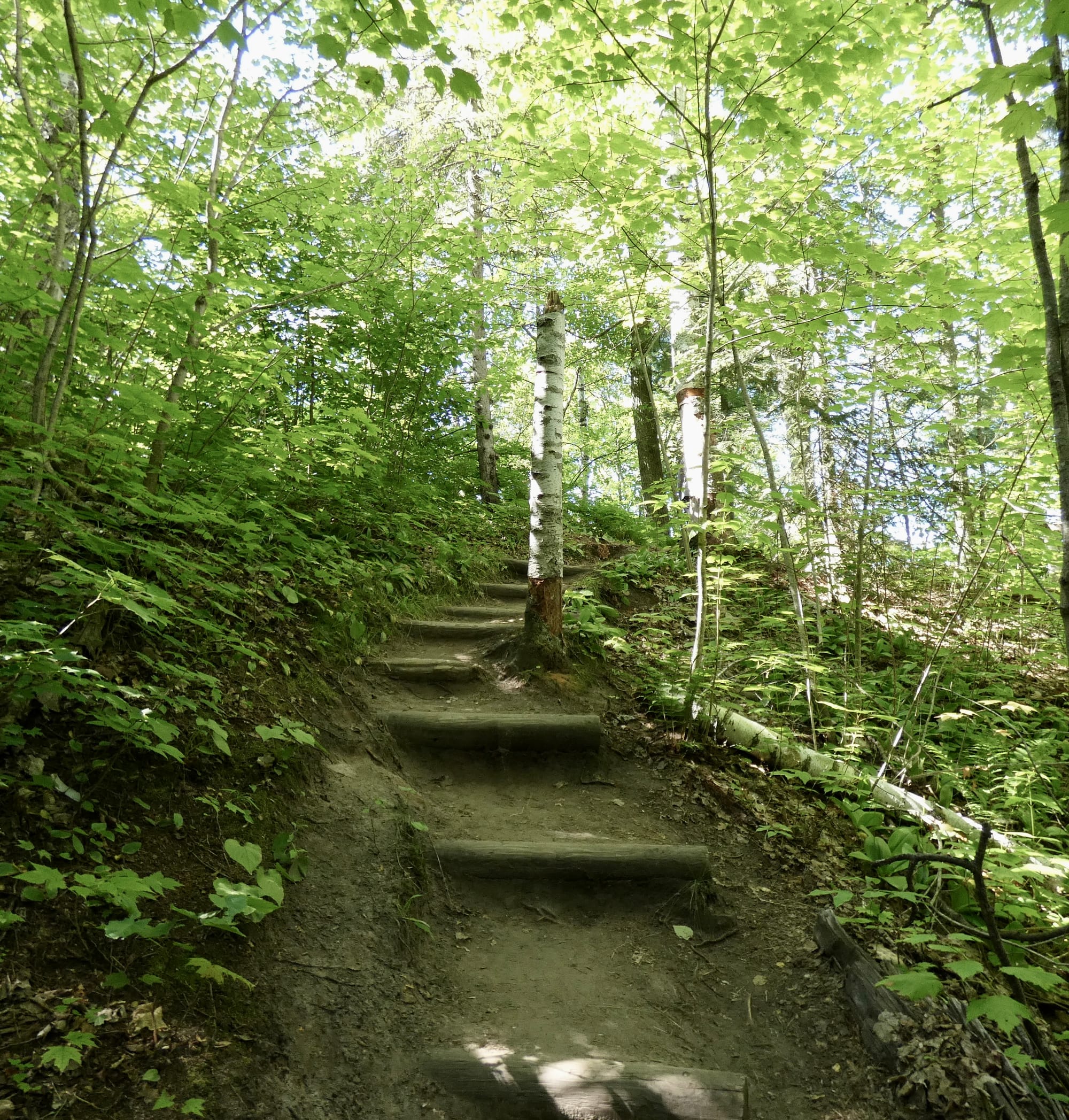
A Treasure from the Ancient Trailblazers: Nine Stages for Calming the Body-Mind
This system ... demonstrates that it is possible to profoundly shut-up, specifically how to go about it, and exactly what remedies are fitting now.
"Why didn't anyone teach me to do zazen like this until now?!"
This is something we often hear from students when we teach the Nine Stages for Calming the Body-Mind (we add "body" in the title to correct the contemporary misunderstanding that body and mind are separate). You see, even students who have practiced zazen for decades are surprised at the powerful effects that come from carefully following the practice instructions, especially the counter-intuitive twists, for the Nine Stages.
In this post (a double issue), we'll approach the Nine Stages for Calming the Body-Mind in three ways. First, we'll offer you an introduction to the Nine Stages. Next, we'll respond to the question, "Is it okay for my zazen to get better?" Many seasoned Zen practitioners struggle with this—some even feel guilty about improvement—and so we turn to the often misunderstood Dogen Zenji and share our uncommon understanding for his view on this issue (warning: an original translation with annotations lurks ahead).
Finally, we'll close with a poem that summarizes the process of stopping and seeing, Wang Wei's "Zhongnan's Exceptional Karma," to add some poetic balance to the issues addressed here. This poem is a favorite of at least several Vine students.
Why are the Nine Stages for Calming the Body-Mind important?
As Zen teachers, our primary task is to facilitate transformative awakenings in our students. Such awakenings seldom arise unless the mind is (or has been) deeply settled in equanimity, aka, one-pointedness. The flow of conceptual cognitions must come to a stop (or close to it), before we can see deeply. Although stopping is necessary, it is the seeing (aka, kensho or awakening) that is transformative.
See this for more:
 Dosho Port
In the spirit of stopping and seeing, Katagiri Roshi offered this analogy:
In order to see deeply and function freely to benefit living beings, we need a basic practice, like counting the breath (aka as "breathing the count," courtesy of Meido Moore Roshi), so that we might take up a key word or phrase from a koan most fruitfully.
So, first we stabilize the mind, then we aim at the “target” of our practice—which is also the mind. And if we awaken as clear as the palm of our hand, we realize that we've been aiming at mind with mind. However, to reiterate, this realization requires a basic practice in order for it to be something more intimate than conceptual cognition.
Unfortunately, many practitioners believe that arriving at one-pointedness is impossible, so the best they can do is allow the torrent of involuntary thinking to flow without getting involved in it. Others believe that the mind might someday quiet down and arrive at one-pointedness, but the best strategy is to let the involuntary torrent of mind flow along without making much effort (i.e. they reject the paramita of diligent effort). Others miss the target through the belief that they are already doing it. Finally, some attach to the belief they are defective in some special way and just can't do it.
That's a lot of missing! Although the specific ways of missing the target differ, these misses are alike in focusing on distractions rather than just settling down and doing the work. The Nine Stages for Calming the Body-Mind demonstrates that it is possible to profoundly shut-up, specifically how to go about it, and exactly what remedies are fitting now.
Simply put, becoming deeply settled is dependent on conditions and skill. And everyone's conditions can be refined. Developing calming skills can be accomplished by all those with a heartbeat, appropriate intention, proper instruction, and diligent application of the methods.
Caution: At this point in our process of working with students with this method, it seems unlikely that most students could move through the Nine Stages without frequent contact with a teacher who has developed proficiency with the system. One reason for this is that we've found that when students are just learning the Nine Stages, they tend of overestimate their stage. After students have reached some fluency with the system, they tend to underestimate their stage. However, because accurate estimations are essential for arriving at "continuous flowing" and "faultless bliss" (see the summary below for more on this), we've developed in-the-room teaching methods to help students more accurately assess where they're at in the unfolding of the deeply settled mind.
If you are looking for teachers and group to train with, here's one possibility:
 Dosho Port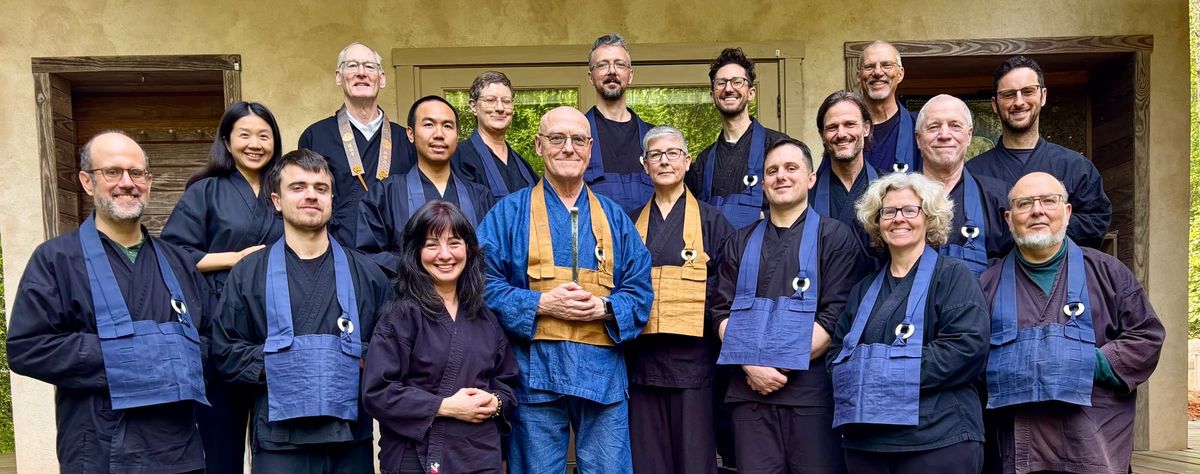
Enter the teaching of the ancient trailblazers
The Nine Stages for Calming the Body-Mind were developed by spiritual geniuses in India during the revolution of the third turning of the wheel, or the Yogacara (i.e., the School of Practicing Union; aka, Cittamātra, i.e., Mind [or Consciousness] Only) in the third and fourth centuries. These masters and their successors included the Nine Stages in many of the essential commentaries. Later, many great Tibetan masters commented on the Nine Stages as well. But the Nine Stages are not a "Tibetan" system—they are embedded in the Mahayana and available for all those with the intention to carry all beings across the flood of suffering to the land of liberation.
The great and massive Yogâcārabhūmi-śāstra (i.e., "Discourse on the Stages of Practicing Union), written by either Asanga (fourth century) or the Bodhisattva Maitreya (coming to a world system near you as a Buddha when the conditions are right), where we find this summary of the goal:
It is significant that when speaking of the Nine Stages, the ancients first talk about the conditions that support the practice and urge us to attend to those conditions. Simply put, supportive conditions for calming the mind include: dwelling in a favorable environment; reducing desires and developing contentment; rejecting a multitude of activities; maintaining pure moral disciple; and rejecting thoughts of desire for sensual objects (see Calming the Mind: Tibetan Buddhist Teachings on the Cultivation of Meditative Quiescence by Gen Lamrimpa for more).
As teachers, we see how powerful attending to the above conditions can be. Students who have succeeded in establishing a quiet, simple life are, unsurprisingly, more likely to deeply quiet the mind. When a student is struggling in the swirl of conceptual cognition (aka, the swirl of worldly affairs), we often will encourage them to review their lifestyle and see what elements can be simplified. Needless to say, this runs counter to our desire-driven consumer culture.
What are the Nine Stages for Calming the Body-Mind? The Yogâcārabhūmi-śāstra lays then out like this (translated from the Chinese they differ a bit from those translated from the Tibetan or Sanskrit):
1) inner setting;
2) continued setting;
3) establishing setting;
4) close setting;
5) taming;
6) pacifying;
7) thorough pacifying;
8) making one-pointed;
and 9) maintaining absorption
—these are the Nine Stages for Calming the Mind.
In addition to the stages and other powerful insights, the Nine Stages system lays out the qualities of attention that are present within each of the stages, and also the active powers (the latter is beyond the scope of this introduction). For the first two stages, inner setting and continued setting, although we try to become one with the basis of attention (i.e. counting the breath), we find that we are swept away in the torrent of involuntary thought. However, if we vigorously turn and focus attention again and again, the mind will begin to settle.

With the third stage, establishing setting, we can stay with the count about half the time. The fourth stage, close setting, brings us to what seems to be a sea-change. We are now able to stay with the count for 30-minutes or more without losing it (until we do lose it and find ourselves back in stages one through three—this kind of back-and-forth movement is normal and is the practice). In the fourth stage, we will still experience medium and subtle excitement and laxity, but the count will not be lost—the torrent of involuntary thought has subsided.
For many students, when they first enter the fourth stage they think that they've entered samadhi, and that awakening is near at hand. But no, the exactingly meticulous nature of the process, of mind, is just beginning to unfold. Remember, one-pointedness is incredibly delicate and subtle.
In the fifth stage, the practitioner experiences what can be called an initial samadhi, and it is here that work with seeing can begin. In our tradition that usually involves working with a koan. Before this, a koan will be undertaken only with conceptual cognitions. Now, as absorption deepens, direct, fresh perception is possible as is the possibility for transformative awakening.
In the fifth through seventh stages, the practice is focused on working through medium and subtle excitement by letting go (not attaching to absorption), and through coarse, medium, and subtle laxity by becoming more taut (not tight) and luminous.
Now, before we go on, a word about laxity. The difficulty of laxity is underestimated by nearly all beginning practitioners who tend to mistake laxity for samadhi. By the time we begin to experience laxity, we've gotten really good at letting go and so we tend to continue to let go even when the results are counter-productive (i.e. when we are in laxity and let go, the laxity becomes thicker and murkier).
Laxity, you see, can feel so good. Imagine soaking in a bathtub with just the right temperature after a long day (or lifetime) spent in the torrent of mind. Or lying in bed, finding the sweet spot of just the right temperature, and then drifting into unconsciousness. Laxity is likewise attractive and practitioners can develop a strong attachment to it. However, because laxity is ego-syntonic, it is difficult to see. Nevertheless, the attachment to laxity must be seen through and relinquished.
With the eighth stage, making one-pointed, although excitement and laxity are still possible (i.e. they are now latent), we can stay near-equipoise for long periods. With the ninth stage, maintaining absorption, we have arrived at effortless one-pointedness. And yet the indicator of the fully mature ninth stage, pliancy, only arises from repeated familiarity with such effortless one-pointedness. Note that what is referred to as "pliancy" is not the physical flexibility that many Zen students experience during sesshin.
Why is true pliancy important? In The Great Treatise on the Stages of the Path to Enlightenment, great master Tsong-kha-pa lays it out:
For more on pliancy within a Zen context, see this:
Dosho Port
In one of the passages that we've translated in the above post, remarkably, Rujing says that pliancy is "the function of the mind seal of the Buddhas and Ancestors."
It is only possible to experience this kind of pliancy by climbing up through the torrent of mind and coming to the peak of the desire realm. Dogen reached this peak after only a couple of months of practice under Rujing's guidance. Without prior training, such a feat is almost impossible. It seems very likely to us, therefore, that Dogen had previous experience in some kind of practice that supported the development of deep calm (such as would have probably been available in his early years of Tendai training, and later during his seven years in the hybrid Zen-Tendai line of Eisai).
And since we're now speaking of Dogen, let's turn to the next issue:
Is it okay for my zazen to get better?
Or, alternately, some Soto Zen students sometimes wonder, "Would Dogen approve of the Nine Stages?"
First, it is okay if Dogen would not approve. Everybody's got issues, including old Dogen. The Nine Stages are an ancient Mahayana method, not something that someone made up yesterday. They pre-date Dogen by almost a thousand years. In addition, much of contemporary Soto Zen is not in alignment with what Dogen actually taught (see the recent series, "Dogen's Private Notes from the Hokyo Era" for more). So, why adhere to Dogen's thirteenth-century wardrobe (i.e. wearing kimono and koromo) without aspiring to embody the deeply settled and illuminated body-mind that Dogen realized?
In addition, many years ago, while studying the Pali Canon under Katagiri Roshi's direction, Dosho asked him about trying some of the methods that the Buddha taught in that collection. Katagiri Roshi said, "Yes, go ahead and try. Some of them might work."
And, if a student works the Nine Stages, the stages really work. So, if you need an okay from a traditional Soto teacher, there you have it.
On the other hand, as you may be aware, in "The Universal Recommendations for Zazen," Dogen wrote, "What is referred to as 'zazen' is not learning dhyana."
On the surface here, Dogen seems to oppose methods for cultivating absorption and the Nine Stages certainly do that. However, we read Dogen to say what Dogen actually says—that he is using the word "zazen" not to refer to cultivating dhyana (aka, absorption), but to the process of cultivating-awakening itself. Dogen, then, is using "zazen" as a marker for post-awakening training, not as it is usually used, i.e. as a practice that includes the pre-awakening phase of training, and he kindly tells us so.
Note that Dogen does NOT say NOT to cultivate absorption, just that he's not using the word "zazen" to refer to those practices, and that his zazen recommendations are directed to post-awakening training. As mentioned above, one possibility is that Dogen learned to deeply calm the mind before going to China, arrived at pliancy while studying under Rujing's tutelage, and then greatly awakened. Then, a few years later in "The Universal Recommendations for Zazen," he uses the word "zazen" to mean "awakening."
"What?" You might object, "I thought that for Dogen there was no before and after awakening."
And we might respond, "Maybe in the torrent of your conceptual cognitions, but by acknowledging Dogen's awakening and highlighting pliancy as the functioning of the seal of Buddhas and Ancestors, Rujing affirms that his world of direct, pure perceptions is not like that."
Now, before we offer you "Zhongnan's Exceptional Karma" by Wang Wei, we'll share our translation of four pivotal sentences from "The Universal Recommendations for Zazen" referred to above, including annotations to more completely make the points:
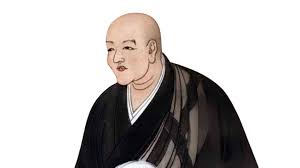
"What is referred to as 'zazen' is not learning dhyana.[1] It is only the dharma gate of peace and bliss.[2] It is cultivating verification through thorough awakening.[3] The koan manifested, cages cannot catch it."[4]
dhyana is generally rendered as "Zen," but the same character, 禪, refers to cultivating absorption and to the Zen school. In this case, Dogen seems to be referring specifically to the cultivation of absorption. Some translators render 習, "learning," as "step-by-step" Zen (or dhyana). ↩︎
peace and bliss, Dogen here follows an earlier instuction manual for zazen by Changlu Zongyuan (died, 1107). Rujing had instructed Dogen to adhere closely to these instructions. Further, "peace and bliss" refers to The Lotus Sutra, Chapter 14, "Practices of Peace and Bliss." There we find this: “Furthermore, bodhisattva-mahasattvas perceive that all things are emptiness and that they are ultimate reality. They are undistorted, unmoving, unreceding, and unturning. They are devoid of any intrinsic nature, just like empty space. They defy all courses of words and expressions. They are not produced, not emerging, not arising, nameless, without attributes, and truly without existence. They are immeasurable, boundless, unimpeded, and unhindered" (translation by Michio Shinozaki, Brook Ziporyn, and David Earhart). In much the same way as this Lotus Sutra passage, Dogen uses both "zazen" and "peace and bliss" to indicate the post-awakening cultivation, reminiscent of the Tendai (Chinese, Tiantai) master Zhiyi's fourth of "Four Lotus Samadhis," the "Samadhi of Neither Sitting or Walking" (aka, "Samadhi of Awake Thought," 覺意三昧). ↩︎
The zazen that Dogen teaches requires a sudden awakening that can then be cultivated. Dogen doesn't say not to cultivate practices that lead to absorption, just that his teaching focus is about zazen that cultivates awakening, not pre-awakening zazen that cultivates delusion. So, Dogen can be read as not opposed to cultivating. It's a question of what. ↩︎
In other words, zazen is the koan manifest, free of contrivance. And, again, Dogen is using the word "zazen" to refer to awakening (i.e., the koan manifest), or in the words of the Lotus Sutra "...immeasurable, boundless, unimpeded, and unhindered." ↩︎
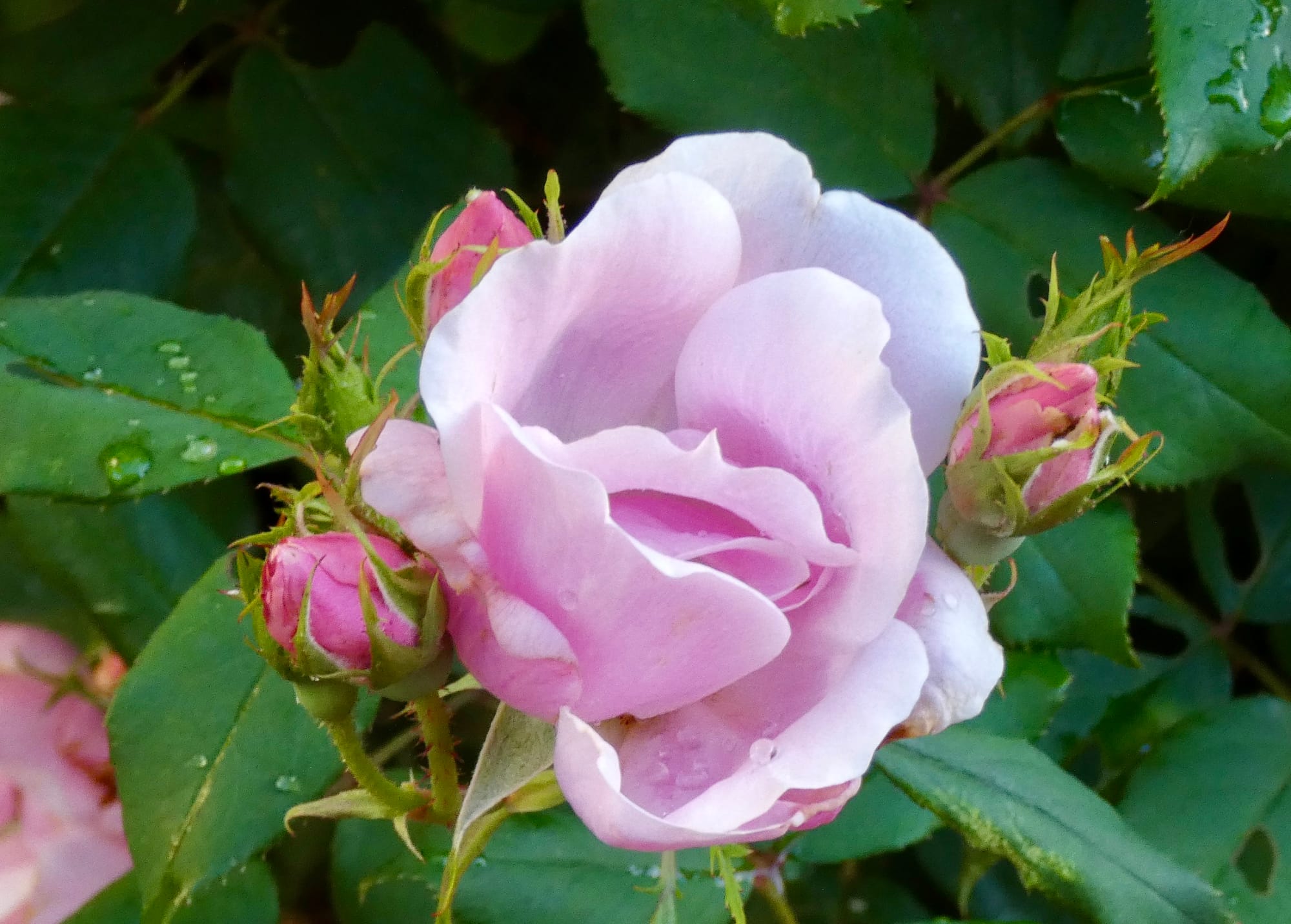
Zhongnan's Exceptional Karma
by Wang Wei; translation by Dosho Port
In my middle years
I was much inclined toward the Way
Now in my twilight years at home
Near South Mountain
Joy comes
Content with going on alone
Excellent circumstances
For knowing this empty self
Going to
the water’s source
Sitting, looking
for the time when the clouds arise
Occasionally I
happen upon the old person of the forest
We talk and laugh
Meeting without limits
Notes
Our next Sunday session, on May 31, will kick-off the summer study of Mind. Paid subscribers are invited to attend. See this for more:
 Tetsugan Osho
Next up here at Vine of Obstacles Zen (in two weeks): "What is the Spirit of a Practitioner?"
Coming soon to Shake Out Your Sleeves and Go: "'You Can't Get This With Thinking:' An Interview with Charlie Korin Pokorny."

In case you missed it:
 Shake Out Your Sleeves And Go