The Spirit of Zen: Wrapping Ourselves in Buddha's Teaching
"How to take care of our life as a disciple of Buddha is a great problem for us and a great practice for us." - Tomoe Katagiri

Recently, a Zen teacher and friend asked me if I thought their community had strayed too far from the Japanese style. I muttered something and moved the conversation along.
Later, I shared this anecdote with an old friend who trained with Katagiri Roshi, and also studied tea with Tomoe-san (see below for more about her). He said that our old teacher would get a big kick out of me being regarded as the Japanese fundamentalist and not the rebel. But here we are.
In this post, I circle back to the question about Japanese-style Zen. In short, I don't think that a Zen teacher's first consideration should be the Zen style of any ethnicity, including the Japanese. Or the Americans. Well, especially the Americans – it's not at all clear that what that motley crew calls "Zen" will transmit successfully. At this point, I have serious doubts.
Returning to my friend's question, rather than an ethnic focus, the key is to live the life of a practitioner based on dharma principles. Therefore, a better question is this: are we actualizing the essential principles of the buddhadharma?
For a home-leaver (aka, "Zen priest"), giving up picking and choosing is an essential principle, the heart of the Zen Way. As one Zen home-leaver said in a recent conversation about this, "It means getting your shit out of the way and just doing what needs to be done."
Other related principles include following someone else's way of practice – your teachers', for example. Like the Zenkaisho says:
There are also the Eight Understandings of Great People:
Finally, in this partial list of principles to consider, the spirit of a home-leaver is to yearn for the ancient Way, and thoroughly reflect on our own feeble efforts to realize and manifest the buddhadharma with heartbreaking sincerity and sincere humility. A sense of humor helps, too. For example, appreciating how simplicity and humility also can become badges for the identity center. "I'm much more humble than you," is an old joke that Myoun Ford Roshi seems to never tire of.
How can we learn to practice dharma principles?
Always within a cultural context. Like many of our Asian forebears, our Japanese ancestors have been at it for a long, long time and have something to teach those willing to learn. One key point for home-leavers is this:
That's Tomoe Katagiri from "Study of the Okesa: Nyoho-e Buddha’s Robe."
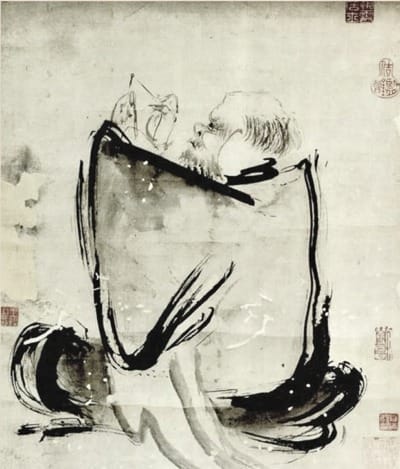
It reminds me of the great reviver of the Caodong/Soto lineage in China, Furong Daokai (1042-1118). He was an eighteenth-generation successor in the continuing Soto line. Daokai had just this spirit (from Denkoroku):
Imagine refusing a fancy robe and a title while risking your neck and facing exile to the malaria-infested South. And that was the best-case scenario. Some practitioners in the past, though, had the moxie to stick to dharma principles, come what may. I admire that. And I wonder what the heck Daokai put in the gruel.
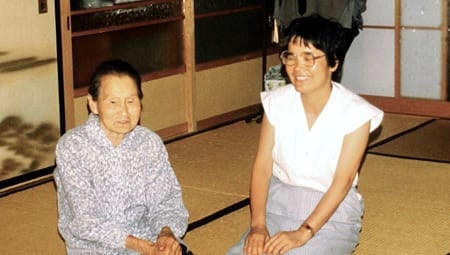
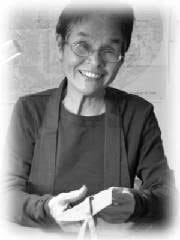
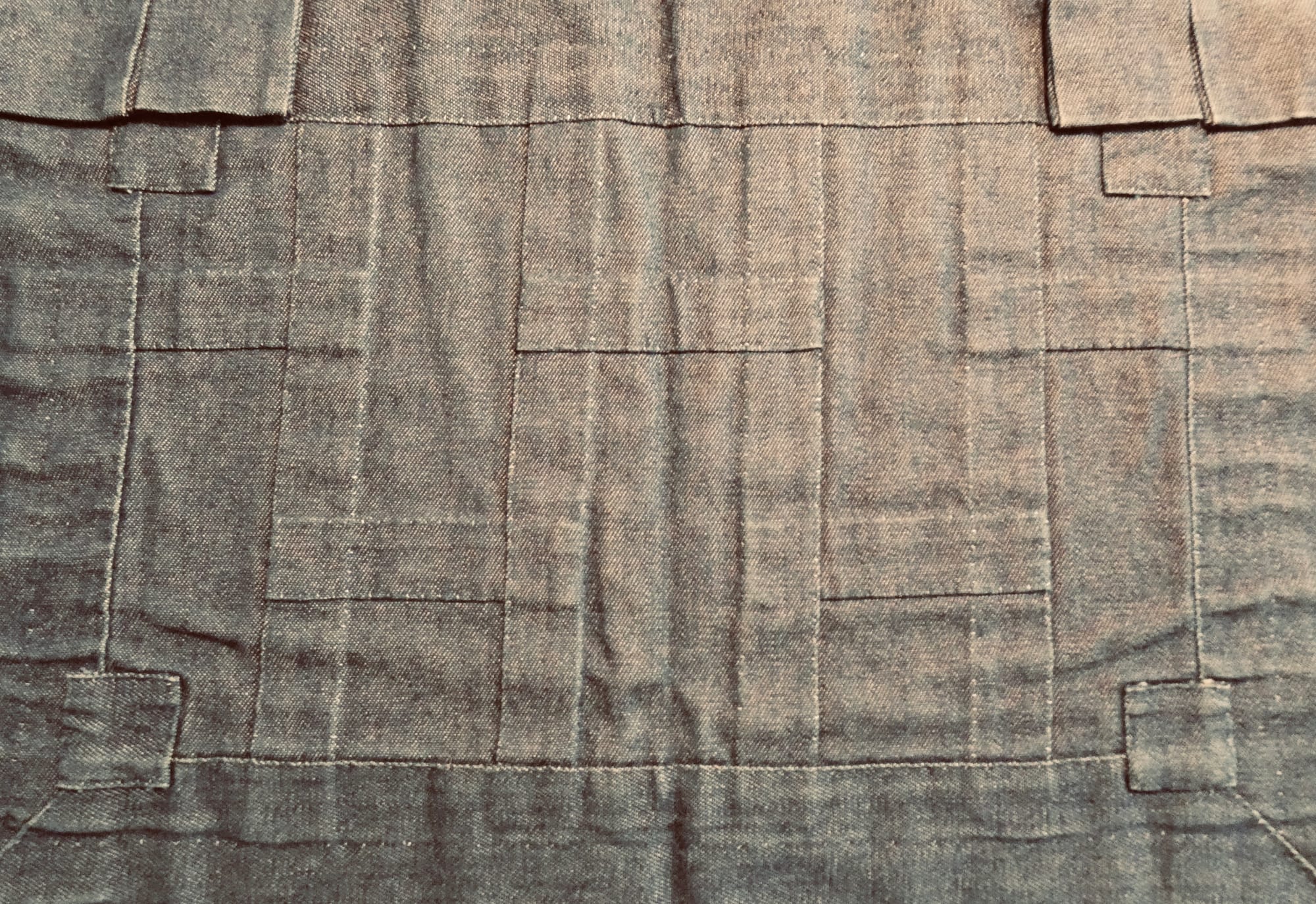
Tomoe-san said it so well: "... put ourselves into a modest life as a disciple of Buddha." A key principle for a home-leaver is to hide the self in the form of Buddha. Tomoe-san was a master (now retired) at sewing the nyoho-e (or "thusness-dharma clothing") style rakusu and kesa – and a powerful teacher within the context of sewing. I sewed two rakusu and three kesa under her guidance, and felt both her capacity to be strict and kind. She often said that she was my dharma mother and I'm deeply indebted to her – especially for her many acts of strictness.
A sewing story
Once I brought a week's worth of rakusu sewing and showed it to Tomoe-san. I was sewing the nyoho rakusu by hand, a task that takes about sixty hours to complete, in the midst of an already over-the-top life (and beginner-level sewing skills). Tomoe-san looked at the rakusu for a for a long minute, saying "ahhhh, ohhhh...," while I was clenching up, thinking "This is not good."
Then Tomoe-san directly and with a neutral tone pointed out what I had done incorrectly. The consideration that my ten hours of sewing during the past week had all been for nothing was a bitter pill to swallow. "So," I said with an edge in my voice, "you're saying that you want me to tear all this out and redo it?"
"No," Tomoe-san said with aplomb, "You will wear this rakusu. I'm pointing out that you will look at this rakusu for decades to come. When you do, you will either see that you sewed it incorrectly, or you will see that you attended carefully to the details, and did it correctly. It is up to you."
So, of course, I tore it out and redid it. It was not the first or last time that I experienced that redo practice. But Tomoe-san's instruction – not that I did it correctly – is what I see whenever I pull out that old rakusu.
Wearing Buddha's robe
However, what I've noticed lately (like during the past twenty years) about those who identify as a "Zen priest" and are called "Reverend," even, is that they often lack the home-leaver spirit and the actual practice of dharma principles. Painful!
Painful!
The primary thing about home-leaving is to become a full-time practitioner of the Buddha Way. It is not about identifying as a Zen priest or tacking "Rev." onto your name. And although in our post-Meiji Zen the specific rules for a "home-leaver," like celibacy, not having a job, etc., have been dropped, in my training, what I saw was a strong home-leaver spirit that came through Katagiri Roshi's (and Tomoe-san's) principled practice of simplicity in food, clothing, and shelter. And their embodied sense of continuous practice.
I don't see that much now. What I see too often is people wearing ostentatious robes with no idea that the robes are a training container (not a badge for the identity center) and sporting silly quasi-Christian titles. It's as if the robes and titles are part of their brand, their "unique style." I also see attachment to the bells and smells of practice, but little transformation; i.e., little clarification of the Great Matter. In other words, I see a lot of larping (a term another dharma friend and Zen teacher recently shared with me).
Here again is Tomoe Katagiri, from "Study of the Kesa: Nyoho-e Buddha’s Robe:"
How can we take "... the most faithful care ... so as to embody the formless Buddha’s teaching?"
Tomoe-san:
The ancient tradition was to use a blended color for the kesa. Both Bodhidharma and Dogen are thought to have worn blue-black kesa. Shakyamuni's is thought to have been a reddish-brown color. If you think you've got more going on than Bodhidharma, Dogen, and Shakyamuni, go ahead and wear your unblended-color kesa!
How does a blended color express dharma principles and the spirit of a homeleaver?
To go beyond purity and impurity. Tomoe-san:
And finally, Tomoe-san on throwing body-mind into the buddhadharma:
And that's what it's all about.
This post is open to all subscribers. For those of you who are paid subscribers, I appreciate your support of this work, making it possible for me to devote time to writing practice.
The comment section is open as usual to paid subscribers.
Coming soon:
"Four Hundred and Four Adverse Meditation Experiences"