Falling Through No-Wall and Waking Up: Muso Soseki and Nurturing the Sacred Womb
"No mind smashes the bones of the empty sky."
Recently, I was talking with a longtime Zen friend, Melissa Myozen Blacker Roshi, and she mentioned that she was reading and much enjoying Thomas Yuho Kirchner's translation of a work by one of the all-time Zen greats, Muso Soseki:
 Musō Soseki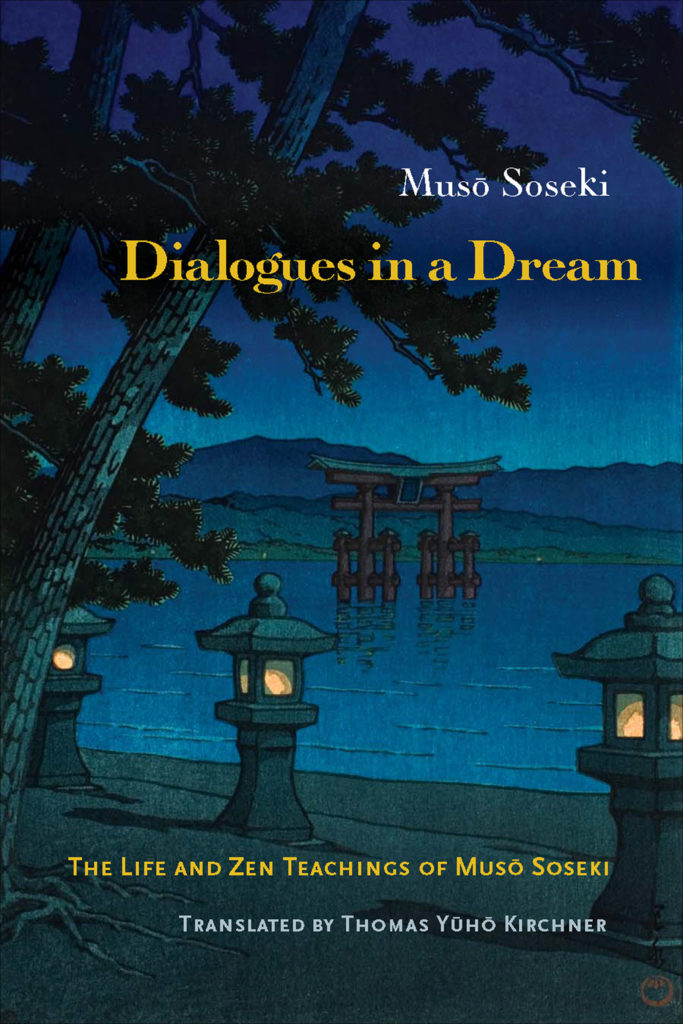
Note: all quotations of Muso in this post are from the above, unless otherwise indicated.
I soon picked up the book and read Kirchner's introduction and translation of Dialogues in a Dream. And on the issues of kensho and post-kensho training, just for starters, Muso's life and teaching hits the bull's-eye.
Muso said,
With the above in mind, I'll offer you a summary of Muso Soseki's path, intent on highlighting what our ancestors did to realize and transmit the awakened Way.
A note for subscribers
Before I get into more about Muso Soseki, I want to mention that I'm also now on Substack at "Shake Out Your Sleeves And Go," focusing on sharing The Record of Empty Hall. There are several posts up now, including a Welcome video. My first podcast, "Opening the World: A Conversation with James Myoun Ford Roshi," will be posted this week. ("Shake Out Your Sleeves And Go" subscribers will be notified by email when it's posted).
What Makes the Koan Way Unique in Zen? A "trailer" that Substack automatically generates - for "Opening the World: A Conversation with James Myoun Ford Roshi," coming June 3 or so.
I'll interview Meido Moore Roshi for the next podcast, due out by the end of the month. You are invited to come by for a visit and to subscribe (free) if you are so inclined.
 Shake Out Your Sleeves And Go
Muso Soseki's background in brief
Muso Soseki (1275-1351; English, Dream Window Penetrate Rock) was a ninth generation descendent from an emperor of Japan. Like a lot of people in the ancient world who went on to become Zen masters, his mother died when he was young – three-years old in his case. At eight, his father enrolled him in a temple so that he could train to become a monk. At 18, he decided that the newish (to Japan) Zen school was for him.
Muso then devoted himself to zazen and dharma study at some of Japan's most prestigious monastic centers, including Engaku-ji and Kennin-ji. He trained primarily with the Chinese émigré master, Yishan Yining (1247-1317; Japanese, Issan Ichinei).
In 1303, after a decade of monastic practice, he reflected on himself and realized that he had yet to clarify the matter of the self.
Muso implored Yishan, "Master, please, directly point the way.”
Yishan answered, “Our school has no words or phrases, and nothing to transmit to anyone.”
“That may be so,” responded Muso, “but be compassionate and at least teach me an expedient means.”
“There are no expedient means,” declared Yishan, “nor is there any compassion.”
Frustrated with his own inability to deeply realize his master's teaching, Muso went to see Koho Kennichi (1241-1316), a Japanese master and the successor of another Chinese émigré master, Wuxue Zuyuan (1226-1286; Japanese, Mugaku). Koho first suggested that perhaps old Yishan was a bit confused. He then urged Muso to devote himself to zazen – as he himself had done with no regrets – and investigate the nature of the self.
Koho explained to Muso that “Only with enlightenment does one understand the meaning [of the dharma].”
Muso asked, “If I persevere in my reading, will I naturally enlighten?”
“If you wish to attain enlightenment,” [Koho] replied, “you must directly investigate the self.”
Muso was profoundly affected by this. As he reported later, "I built a hut and vowed to myself that I would either clarify this matter or molder away with the grasses and trees."
Note that it's an either-or situation – either awaken or molder away.
This encounter marked the end of Muso's first phase of training, characterized by deeply studying the buddhadharma and mastering the training container. The next phase of Muso's unfolding was characterized by living in remote hermitages, quietly practicing zazen, and through kensho and post-kensho training, investigating self-nature.
I'm struck by Muso's hermit lifestyle in contrast to today's hyperactive, scrolling social-media, AI-supported flurry. Reflecting on the intensity and duration of Muso's wholeheartedness is like staring up into the sun at midday, with my hand to my forehead, shielding my eyes from the intense radiance.
No mind smashes the bones of the empty sky
Muso's breakthrough came in 1305 after about two years of hermitage practice. Kirchner tells is like this:
Later, Muso wrote a verse about the experience:
I dug in the earth
looking for the blue of heavens
only to feel
the pile of earth
choking me
until once in the dark of night
I tripped on a broken brick
and kicked it into the air
and saw no mind
smash the bones
of the empty sky
- translation by W.S. Merwin and Soiku Shigematsu (modified)
After this lovely kensho, Muso continued his retreat for several months before going to Koho for verification. Without words, Koho noticed the change in Muso, and after what Kirchner reports as "a lively exchange of questions and answers" (unfortunately, without more details), Koho confirmed Muso as one of his dharma successors.
It is notable that Koho gave Muso dharma transmission so quickly, apparently after meeting him just twice. Today, a kensho experience like Muso's would mark the beginning of the checking process followed by subsequent koans. Dharma transmission would wait until the teacher had much more direct experience working with the student. Perhaps, though, in this case, Muso's awakening was more thorough than most nowadays, and also perhaps Koho was clearer than most teachers, such that he saw Muso through and through.
Several years later, Koho gave the dharma robe he'd received from Wuxue to Muso, indicating that he saw Muso as his primary successor.
It seems to have been in this freshly-awakened period that Muso wrote this verse:
have gone from my breast
and I play joyfully
far from the world
For a person of Zen
no limits exist
The blue sky must feel
ashamed to be so small
- translation by W.S. Merwin and Soiku Shigematsu
 Musō
Musō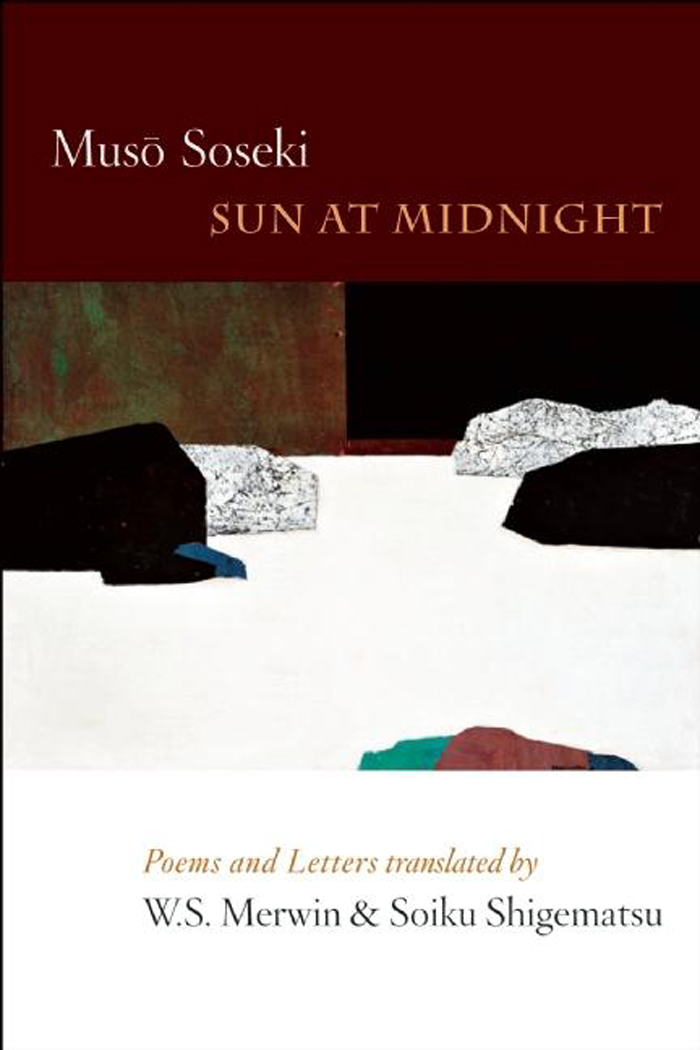
Nurturing the Sacred Womb
Following his awakening and dharma transmission, Muso continued his training, living in remote hermitages, and practicing zazen like a maniac for most of the next twenty-five years or so.
Why?
Muso had entered post-awakening training. Indeed, he took it up with inspiring devotion. An awakening experience is often likened to knocking a hole in the wall of separation, while post-awakening training is about knocking the whole wall down. Muso's initial kensho seems to have blown quite a big hole in the wall, and yet, he recognized the difficulty and subtlety of living his awakening continuously.
This phase of training is also known as "nurturing the sacred womb" (or "long cultivation of the sacred embryo;" 聖胎長養; Japanese, shotai choyo). One of the most famous shotai choyo is of a contemporary of Muso, Daito (1283-1338, aka, Shuho Myocho), who after his awakening and dharma transmission from Daio (1235-1309, aka, Nampo Shomyo) spent twenty years in Kyoto living with beggars under the Gojo Bridge. Likewise, Rujing (1163-1268) told Dogen (1200-1253) to go back to Japan, hide out in the mountains, and devote himself in just this way.
Digital Dictionary of Buddhism:
The ten practices referred to above, stages 21 to 30 of the 52 stages of the bodhisattva path, are the following practices: giving joy, beneficial action, non-opposition, indomitability, nonconfusion, skillful manifestation, nonattachment, realizing that which is difficult to attain, good teachings, and truth." For more detail, click here.
It also needs to be said that even though someone who was totally successful with nurturing the sacred womb and who worked through stages 21-30 of the bodhisattva path – an incredibly rare occurrence – that such a practitioner would still have 22 stages to go. So, we're all on the road together.
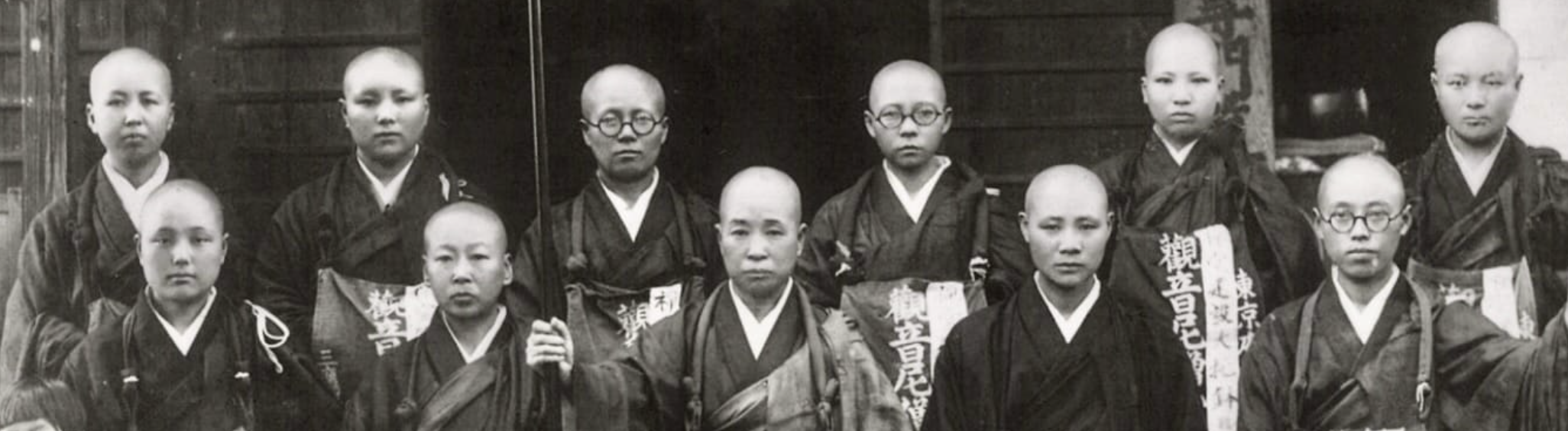
Etsujo Aoki in the forthcoming In This Body, In This Lifetime: Awakening Stories of Japanese Soto Zen Women (due to be available on June 17, 2025; look for my review next week) expresses the heart of this stage of training like this:
Muso said of this process,
Muso undertook this process in remote hermitages, moving repeatedly when students would come calling. Indeed, Kirchner shares a dizzying number of times that Muso moved to avoid prospective students knocking on his gate. Small towns of monks repeatedly grew up near him, and he would slip quietly away, going deeper into the mountains. (I tried to outline these moves so that I could report a specific number to you, but it was just too dizzying. It seems to have been at least a couple dozen during the thirty years when he was primarily engaged in nurturing the sacred womb.)
Very few people undertake the training in this way today. Even Shaku Soyen Roshi (1860-1919), a great master who helped usher Zen into the modern world, went to college with Christian professors and then to Ceylon to nurture the sacred womb. I did an intermittent pilgrimage, visiting about twenty teachers and training with half-a-dozen, while working in the schools and raising two children. Although the training can be done anywhere, including in the householder lifestyle, these approximations of nurturing the sacred womb seem to me to be far from ideal. At least, they were not ideal in my case.
One factor that made Muso's thirty-years of living in remote areas while nurturing the sacred womb possible – prior to his appearing in the world to teach – was that in his time the Zen movement in Japan was already robust. Although Zen had been in Japan for only about one-hundred years, the buddhadharma was long established. So Muso joined many thousands of practitioners doing monastic training under the guidance of dozens of awakened teachers. And there were householders across the class-system (especially among the samurai and nobility) who were supportive of people going off the grid for decades.
I suspect that the buddhadharma won't really be established in the present global culture until there are practitioners who go as deeply as Muso. In order to go so deeply, approximating stages of training like nurturing the sacred womb by living a normal life will likely not be sufficient.
For a perspective on the inner content of this process, see this recent post for paid subscribers:
 Dosho Port
Muso did not molder away with the grasses and trees
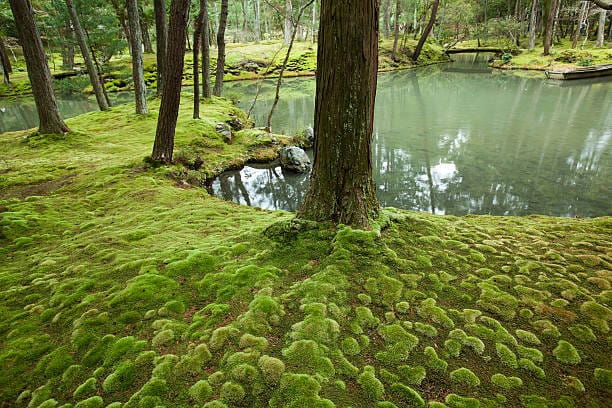
Due to – not despite – Muso's long period of nurturing the sacred womb, he had a profound influence on Zen and the culture of Japan. Muso gave dharma transmission to 127 people, was the teacher for 13,000, mediated conflicts between the military and the aristocracy (or tried to), helped launch the Five Mountain monastic system, led the way in Japan for using poetry and prose to express the buddhadharma, and designed many incredible gardens (see the photo at the top).
In addition, Muso's example has inspired many practitioners, including the great Hakuin Zenji who, as a young monk, said,
For the persimmon reference, see the full story in Wild Ivy: The Spiritual Autobiography of Zen Master Hakuin, translated by Norman Waddell, 57-60.
Muso's legacy is that of a great bodhisattva.
Nine bows, old man, well done! May your example inspire hundreds of generations.
Finally, thanks to Tetsugan Sensei for her work on this post.
Coming soon
Soto Zen Women Wake Up: A Review of In This Body, In This Lifetime: Awakening Stories of Japanese Soto Zen Women